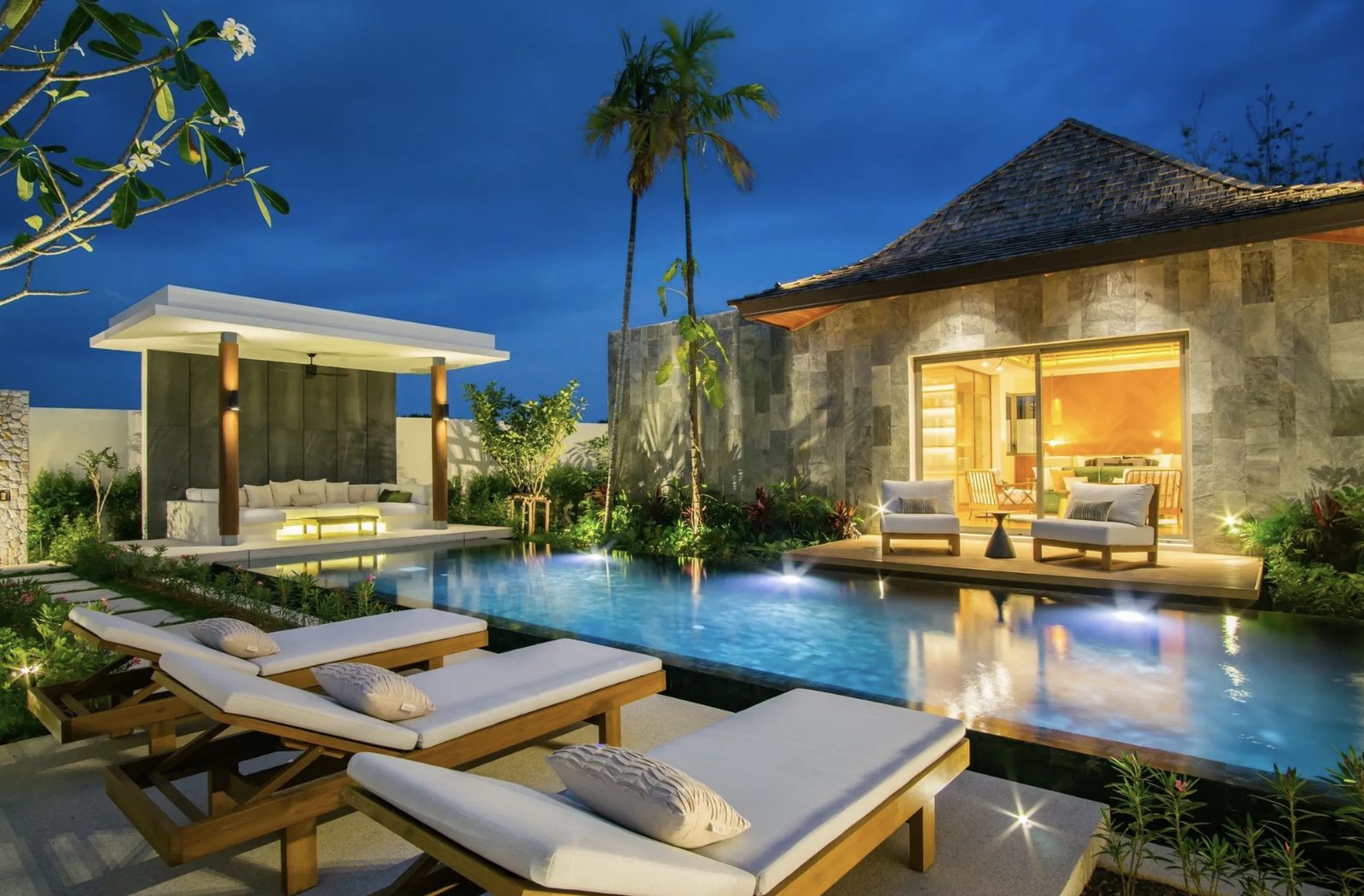
Contemporary Bali Inspired Pool Villa Near Layan Beach asking $1.3M
Foreigners cannot own the land under a Phuket villa. What you actually buy is a building and a registered lease, and the quality of that lease decides what the purchase is worth. Here is how the structure works and what to verify first.
By Peter Tumbas · Berkshire Hathaway HomeServices New England Properties · phuketforamericans.com
Layan is a stretch of northwest Phuket coastline in Thalang district, close to Bang Tao and north of the Laguna resort corridor. Villa buyers are drawn to it for pool-villa product in a quieter setting than the busier west coast beaches. The legal structure behind those villas is the same as anywhere else in Phuket, and it is the part most American buyers underestimate. In a US purchase you receive fee-simple title to both the building and the land. In Thailand, a foreigner cannot do that, and everything in this article follows from it. For the wider ownership rules, see Phuket for Americans' ownership structure guide.
A foreigner can hold a building in Thailand but cannot hold the land beneath it. The standard lawful route is therefore to buy the building and take a registered lease of the land from the Thai owner, which is often the developer's Thai company. The Thai Civil and Commercial Code limits a lease to 30 years per term, and a lease over three years must be registered at the Land Department to be fully enforceable. An unregistered lease should not be accepted as your protection.
Many developers market renewal options that stretch the arrangement to 60 or 90 years, in 30-year steps. These renewal rights are contractual promises, not statutory guarantees. Whether a renewal clause binds the landowner's successors depends on how it is drafted and registered, and your lawyer should review it line by line. Value the villa on the remaining guaranteed term, and treat the renewals as upside. Leasehold versus freehold is covered in more depth in Phuket for Americans' leasehold versus freehold guide.
Policy watch: proposals to extend permitted foreign lease terms to 99 years have been discussed publicly, and the site's most recent review, in May 2026, found they had not become law. Do not price a villa on a rule that has not been enacted, and confirm the current position with your lawyer.
| Item to Verify | What the Lawyer Checks | Red Flag |
|---|---|---|
| Land title | Chanote at the Land Department, with survey boundaries matching the plot | Lower-grade title, or boundaries that do not match the plot you were shown |
| Lessor | Lessor named in the lease is the registered owner of the land | Lessor is a different person or company than the title holder |
| Lease term and registration | Registered lease at the Land Department, with the term and renewal wording on record | Unregistered lease, or renewals promised only in a side letter |
| Mortgages and encumbrances | Land Department record showing nothing registered ahead of your lease | Developer mortgage on the land that is not discharged |
| Building ownership and permits | Building permit and certificate of completion, with the building transferred to you | Seller cannot produce permits, or the building is outside the permit |
| Access, utilities, and estate fees | Registered road access, water and drainage, and the estate's fee and rules | Access across private land with no registered right |
| Ownership structure | Lease plus building ownership, or a freehold condo within quota | Any Thai company or nominee arrangement proposed for holding the land |
The Chanote is the gold-standard Thai land title. It confirms ownership and records precise survey boundaries. Lower-grade titles, such as the Nor Sor Sam Gor and below, carry boundary and encumbrance risks and are weaker foundations for a long registered lease. Ask your lawyer to confirm the title type at the Land Department, not from a copy the seller supplies. The title types are explained in Phuket for Americans' Chanote guide.
Check the order of registrations. A mortgage registered against the land before your lease can leave your lease exposed if the lessor defaults. Your lawyer should confirm that any existing mortgage is discharged at or before the lease registration, or that your position is protected in writing.
The lessor must be the registered owner of the land. Confirm the lessor's identity and authority, and read what the lease says about the land being sold, mortgaged, or redeveloped during your term. Check the wording on renewal fees, on who pays land and building taxes, and on what happens to your rights if the lessor's company is dissolved.
Plan the exit before you enter. A leasehold villa becomes worth less as the remaining term shortens, and a buyer will price it that way. Financing for leasehold property is also harder to find than for a freehold condo. Ask your lawyer what happens to the lease on your death, because it affects estate planning. At sale, the gain is also taxed under US rules, as explained in the guide to selling Phuket property as an American.
Main exposure: The developer, the estate rules, and the shared infrastructure.
Main exposure: The land itself and the seller's own paperwork.
Leasehold registration is typically about 1.1% of the lease value, on top of other transfer costs, and total buyer costs commonly run 5 to 7% of the purchase price. Get a written breakdown from your lawyer before the deposit, and see Phuket for Americans' transaction cost guide for the full list. Bring purchase funds into Thailand in foreign currency through your own account and keep the bank paperwork, which matters when you later sell and want to take money out. Your lawyer should confirm which documents the Land Office requires for your specific registration.
For a villa priced near $1.3M (roughly 46.8 million THB), the lease structure is the largest single variable in what you actually own. Ask your lawyer to also check the land-use zoning and any building height limits that apply to the plot and to its neighbours, since both affect views and future value. Hillside plots should come with drainage and slope information.
Some sellers will offer to hold the land through a Thai company, with Thai nominee shareholders on paper and the foreign buyer in control in practice. This is prohibited under the Foreign Business Act, and enforcement has increased since 2024. A buyer using such a structure risks losing the property and exposes themselves to penalties. If an agent, developer, or lawyer suggests it, walk away. The lawful alternatives for a foreigner are a registered lease with building ownership, or a freehold condominium unit within the 49% foreign quota. If the condo route interests you, read the due diligence guide for Phuket condos.
Submit a private inquiry and Peter will connect you with a vetted Thai property lawyer who can check the title, the lessor, and the lease terms before you commit a deposit. Referral service, no cost to the buyer, no obligation.
Submit a Private Inquiry 412-225-0598 | petertumbas@bhhsne.comCan an American own a pool villa in Layan, Phuket, Thailand?
Not the land. Foreigners cannot own land in Thailand, so a villa purchase is normally split into two legal instruments: ownership of the building, which a foreigner can hold, and a registered lease of the land beneath it. The Thai Civil and Commercial Code limits a lease to 30 years per term. That is the standard, lawful route for Americans buying a villa in Layan or anywhere else in Phuket. It differs from a US purchase, where you receive fee-simple title to both building and land.
How long is a villa lease in Phuket, Thailand, and can it be renewed?
The maximum registered lease term is 30 years. Many developers advertise renewal options that extend the arrangement to 60 or 90 years in 30-year steps, but those rights are contractual promises, not statutory guarantees. Whether a renewal clause binds the landowner's successors depends on how it is drafted and registered, so an independent Thai lawyer should review it. Value the villa on the remaining guaranteed term, not on the advertised maximum.
What land title should a Layan, Phuket villa sit on?
The Chanote, the gold-standard Thai land title, which confirms ownership and survey boundaries. Lower-grade titles, such as the Nor Sor Sam Gor and below, carry boundary and encumbrance risks and are weaker foundations for a long registered lease. Ask your lawyer to check the title at the Land Department, confirm that the lessor named in the lease is the registered owner, and confirm that no mortgage or other encumbrance is registered ahead of your lease.
What does it cost to register a villa lease in Phuket, Thailand?
Leasehold registration is typically about 1.1% of the lease value. This sits alongside other transfer-related costs, and total transaction costs for buyers commonly run 5 to 7% of the purchase price. The exact figures depend on how the purchase is split between the building and the lease. Ask your lawyer for a written breakdown before you pay a deposit, so that no cost appears for the first time at the Land Office.
Can I use a Thai company to own a villa in Layan, Phuket?
Not through a nominee arrangement. A Thai company in which Thai shareholders hold the majority on paper while the foreign buyer controls the land in practice is prohibited under the Foreign Business Act, and enforcement has increased since 2024. If an agent, developer, or lawyer proposes this structure, treat it as a red flag and walk away. The lawful options for a foreigner are a registered lease with building ownership, or a freehold condominium unit within the foreign quota.
Do I need an independent Thai lawyer to buy a villa in Layan, Phuket?
Yes, and the lawyer should be independent of the developer, the seller, and the agent. The lawyer verifies the land title, the lessor's identity, the registered lease terms, the building permits, and any encumbrances, and reviews the contract before the deposit. Peter Tumbas is licensed in Connecticut, not Thailand, so he does not act as your Thai legal representative. Through Phuket for Americans he introduces buyers to vetted Thai property lawyers as a no-cost referral service.
Peter built phuketforamericans.com to give American buyers the ownership and legal context that developer marketing rarely discloses. He is not licensed in Thailand and is not a Thai attorney. All introductions to Thai property lawyers are made as a referral service at no cost to the buyer. More about Peter
Related reading: Leasehold vs freehold · What is a Chanote? · Laguna and Bang Tao